
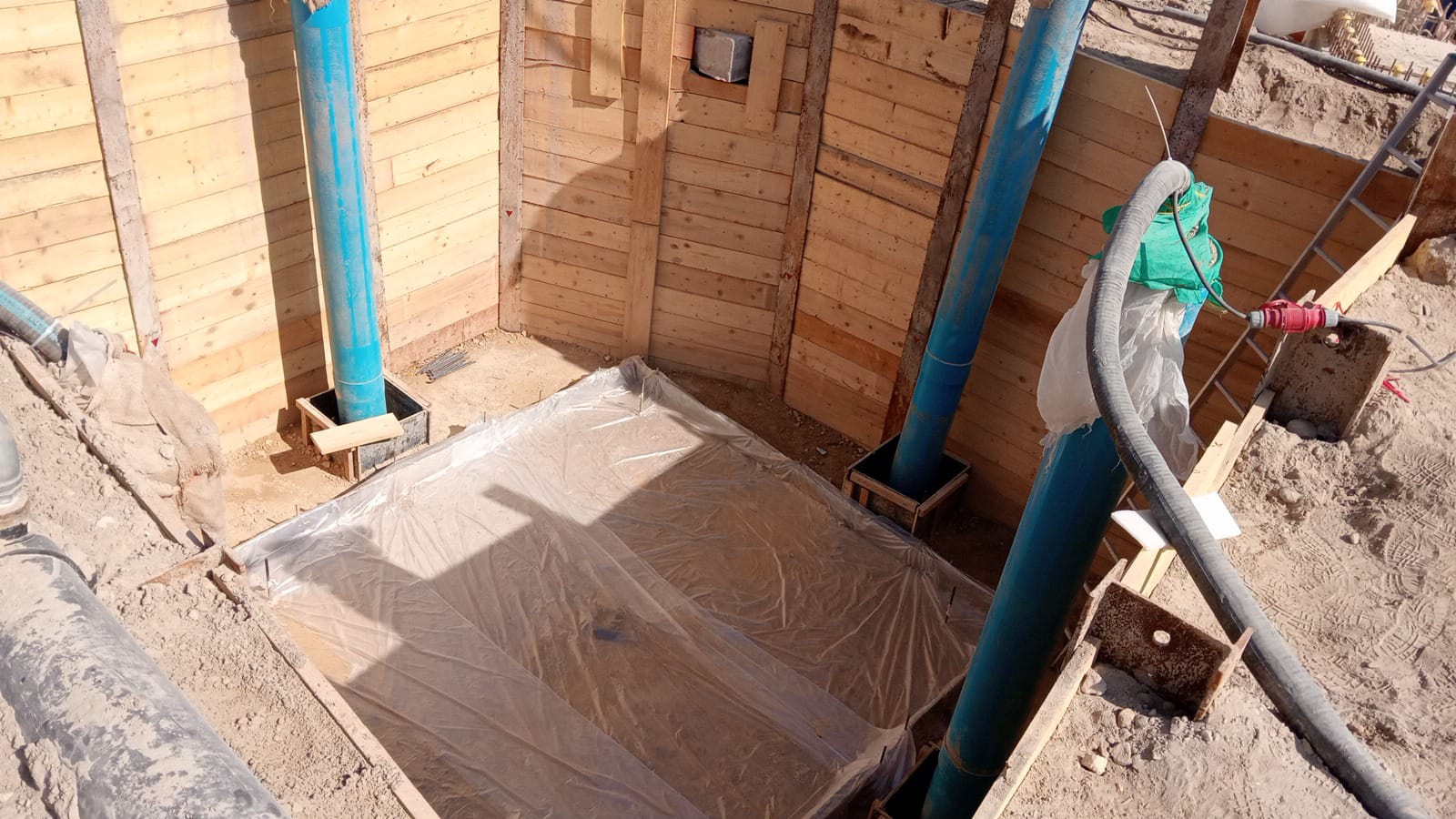
WHY DEWATERING IS THE FIRST STEP IN SUCCESSFUL CONSTRUCTION PROJECTS IN OMAN
Every successful construction project begins long before concrete is poured, steel is erected, or roads are paved. It starts with preparing the ground itself.
For many projects across Oman, one of the biggest challenges hidden beneath the surface is groundwater. While groundwater is a natural part of the environment, it can become a major obstacle when construction activities require excavation below the water table.
Many project delays, cost overruns, and excavation failures can be traced back to one issue: inadequate groundwater control.
This is why professional dewatering has become one of the most critical stages of modern construction.
Whether it's a pumping station, sewage network, road project, industrial facility, foundation excavation, or utility corridor, dewatering often determines whether a project progresses smoothly or faces costly setbacks.
At AAA United Oman Construction, we have spent more than 18 years helping clients across Oman overcome groundwater challenges through engineered dewatering solutions. Over the years, we have seen firsthand how proper groundwater management transforms construction sites from risky environments into stable and productive work zones.
What Happens When Groundwater Is Ignored?
Groundwater does not stop flowing simply because construction has started.
Once excavation reaches below the groundwater level, water naturally enters the excavation area.
Without professional dewatering, several problems can occur almost immediately.
Excavation Instability
Water weakens soil structure.
As groundwater saturates excavation walls, soil can lose strength and become unstable.
This increases the risk of:
- Excavation collapse
- Soil movement
- Worker safety hazards
- Equipment instability
Construction Delays
Flooded excavations prevent workers from carrying out critical activities.
Tasks such as:
- Foundation construction
- Pipe installation
- Reinforcement placement
- Concrete pouring
become difficult or impossible under wet conditions.
Increased Project Costs
Delays, rework, equipment downtime, and emergency repairs can significantly increase project costs.
Often, the cost of correcting groundwater-related problems exceeds the cost of implementing proper dewatering from the beginning.
Poor Foundation Performance
Excess groundwater can affect soil bearing capacity and foundation quality.
Over time, this may contribute to settlement issues and structural concerns.
Understanding Dewatering
Many people assume dewatering simply means pumping water out of an excavation.
In reality, effective dewatering is a carefully engineered process.
It involves:
- Understanding groundwater behavior
- Evaluating soil conditions
- Designing suitable control systems
- Installing equipment correctly
- Monitoring performance continuously
The goal is not simply removing water.
The goal is creating safe, stable, and productive construction conditions.
Why Oman Presents Unique Groundwater Challenges
Construction projects throughout Oman encounter a wide variety of soil and groundwater conditions.
Factors influencing groundwater behavior include:
Coastal Conditions
Many developments are located near coastal regions where groundwater levels can be relatively high.
Infrastructure Expansion
Rapid development requires deep excavations for utilities, roads, sewage systems, and pumping stations.
Industrial Growth
Industrial projects often involve large foundations and underground infrastructure that require groundwater management.
Urban Development
Construction near existing buildings and roads requires careful control of groundwater to prevent settlement and structural impacts.
These conditions make professional dewatering an essential component of project planning.
The Relationship Between Dewatering and Safety
Construction safety is often discussed in terms of equipment, procedures, and personal protective equipment.
However, stable ground conditions are equally important.
A well-designed dewatering system contributes directly to site safety by:
- Improving soil stability
- Reducing slip hazards
- Protecting excavation walls
- Improving access for workers and equipment
- Reducing emergency situations
Safe construction begins with stable excavation conditions.
How Dewatering Supports Foundation Construction
Strong foundations require strong ground conditions.
Groundwater can negatively affect foundation works in several ways.
Reduced Bearing Capacity
Water-saturated soils often provide less support for structural loads.
Construction Challenges
Excess groundwater complicates:
- Excavation activities
- Reinforcement installation
- Concrete placement
- Quality control inspections
Long-Term Performance
Foundations constructed under unstable conditions may experience future problems.
Professional dewatering helps create the controlled environment necessary for quality foundation construction.
Common Types of Dewatering Systems
Not every project requires the same solution.
The most suitable approach depends on:
- Groundwater levels
- Excavation depth
- Soil conditions
- Project duration
Wellpoint Dewatering
Wellpoint systems are commonly used for shallow and medium-depth excavations.
Benefits include:
- Rapid installation
- Cost efficiency
- Effective groundwater lowering
- Excellent suitability for utility and pipeline projects
Deep Well Dewatering
Deep well systems are designed for larger excavations and more demanding groundwater conditions.
Advantages include:
- Greater drawdown capability
- Higher pumping capacity
- Suitability for major infrastructure projects
- Reliable long-term performance
Custom Groundwater Control Solutions
Some projects require a combination of techniques to address unique site conditions.
Professional assessment ensures the most effective solution is selected.
Industries That Depend on Dewatering
Dewatering plays a critical role across multiple sectors.
Pipeline Construction
Water and sewage networks frequently require trench excavations below groundwater level.
Pumping Stations
Deep excavations for pumping stations often depend on extensive groundwater control.
Road Infrastructure
Underpasses, drainage systems, and utility corridors frequently require dewatering.
Industrial Facilities
Factories, logistics hubs, and processing plants often involve deep foundations and underground infrastructure.
Commercial Developments
Basements, parking structures, and utility systems require stable excavation conditions.
Why Professional Design Matters
A common misconception is that dewatering equipment alone solves groundwater problems.
Equipment is important, but engineering design is even more important.
Proper design ensures:
- Correct pump selection
- Appropriate well spacing
- Efficient operation
- Controlled groundwater lowering
- Protection of nearby structures
Without engineering, even expensive equipment may perform poorly.
The Financial Benefits of Proper Dewatering
Many clients initially view dewatering as an additional cost.
In reality, it often reduces total project expenses.
Benefits include:
Faster Construction
Dry conditions improve productivity.
Fewer Delays
Construction activities proceed according to schedule.
Reduced Rework
Stable excavations minimize corrective work.
Improved Quality
Foundations and infrastructure can be installed correctly the first time.
Lower Risk
Effective groundwater control reduces the likelihood of unexpected project disruptions.
What Makes a Good Dewatering Contractor?
Choosing the right dewatering contractor is just as important as choosing the right system.
A qualified contractor should offer:
Technical Expertise
Understanding groundwater behavior and soil conditions.
Engineering Capability
Ability to design site-specific solutions.
Reliable Equipment
Modern systems capable of continuous operation.
Monitoring & Support
Ongoing supervision throughout the project.
Proven Experience
Successful completion of similar projects.
Why Clients Trust AAA United Oman Construction
AAA United Oman Construction has developed a strong reputation as a trusted dewatering contractor in Oman.
Our clients value:
- More than 18 years of experience
- Complete design & build capability
- Specialized groundwater control expertise
- Experienced engineers and site teams
- Modern dewatering equipment
- Strong safety standards
- Reliable project execution
Our approach focuses on solving groundwater challenges before they affect project performance.
The Future of Construction Depends on Groundwater Management
As Oman continues investing in infrastructure, transportation, industrial development, and utility networks, excavation activities will become increasingly complex.
Groundwater will remain one of the most significant challenges facing construction projects.
The companies that plan for groundwater management from the beginning will be better positioned to deliver projects safely, efficiently, and profitably.
Dewatering is not simply a construction activity.
It is the foundation upon which successful excavation, foundation construction, and infrastructure development are built.
For developers, contractors, consultants, and project owners, understanding the importance of groundwater control can mean the difference between a project that struggles and a project that succeeds.
Contact Information
AAA United Oman Construction
Office Tel: 24112114
GSM: +968 91396623 & +968 91396624
Email: contactus@aaaunitedoman.com | bhushan@aaaunitedoman.com
Address: Ziad Building, Opposite Spar Hypermarket, Ghala Heights
Website: www.aaaunitedoman.com